


This is a reader-supported publication. I give it all away for free but could really use your support if you want me to keep doing this.
Referencing a previous post on this subject:
[POST] Give Trump the Nobel already!

This is a reader-supported publication. I give it all away for free but could really use your support if you want me to keep doing this.
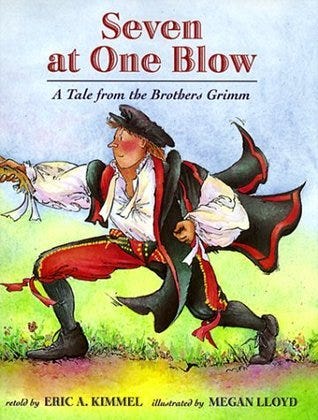
The man is clearly trying, but in the usual Trumpian way. His claim of stopping seven wars comes off rather fairy-tale like, but, what the hell! If our brave little president is gonna BS his way to a prize, then I say, aim high!
Most of Trump’s claims—spanning conflicts such as Israel-Iran, Rwanda-Congo, Armenia-Azerbaijan, Serbia-Kosovo, India-Pakistan, Thailand-Cambodia, and Ethiopia-Egypt … most are reasonably contested not only in their substance but in what qualifies as “ending a war.” Many of these situations involved short-term ceasefires or de-escalations, some were not genuine wars but tense disputes, and several involved unresolved or ongoing issues that persist beneath the surface. Trump’s negotiations often emphasized American leverage and self-interest alright, but as for genuine reconciliation between warring parties? Not so much.
For enduring peace, wars must not just stop—they must settle into new rule sets that prevent future escalation. Many of Trump’s interventions lacked the follow-through required to create new institutions or trusted frameworks, meaning we’re seeing the same old, same old from The Donald — spiking the football at midfield on first down.
True peacemaking is about architecture, not optics. Trump’s signature approach—transactional, disruptive, “next two weeks”—simply does not build the connective tissue required for peace that survives the next flashpoint.
So, no, no Nobel for our POTUS.
The Nobel Peace Prize, for all the critiques aimed at it, still attempts to reward those who reinforce systemic stability in a fractured world order. Donald Trump, by contrast, is the first post‑global president in the modern American era, or someone who sees chaos not as a challenge to contain but as fuel to burn.
In others words, the Nobel Peace Prize is designed to counter international actors like Trump—not reward them.
Let me, David Letterman style, count down the ways …
10. Because peace prizes reward system builders—not system arsonists
The Nobel Committee tends to recognize leaders who extend or defend connectivity. Trump’s brand, conversely, is predicated on reversing system integration: tearing up trade deals, alienating allies, weaponizing tariffs, and cheering on fragmentation as a form of “sovereign freedom.” He is the Nobel Peace Prize committee’s worst nightmare.
9. Because the Peace Prize honors institutionalizers—not grudge-meisters
The Nobel Committee endorsed leaders like Mandela, Arafat, Sadat, Begin, Peres, Rabin, and Carter not because they were perfect peacemakers but because they rose above personal animus to institutionalize peace. Trump’s transactional diplomacy never seeks to institutionalize anything, save a Trump Tower deal whenever one can be included. Trump lives in 24‑hour news cycles, crafted for cable victory laps.
Theory of the prize: Trump’s so‑called Abraham Accords, his lone supposed “peace legacy,” were a cluster of arms trade deals wrapped in diplomatic clothing—at best a containment strategy for Iran and not a pathway toward peaceful coexistence. They only work as a justification for Trump’s Nobel if your metric of peace ignores human rights, refugees, and the Palestinians in general. The Nobel Committee … is a bit pickier on that score.
8. Because the Peace Prize demands personal risk for peace—not self-dealing
The Nobel ideal is typically captured by some lone leader taking domestic political fire to achieve something larger than themselves. Trump’s logic inverts this. He wants everybody else to take on the domestic risk while he builds up his nomination story. Nixon’s China play took risk. Reagan’s INF Treaty with Gorbachev took risk. Where is Trump’s risk? The man cancels multilateral summits whenever told he cannot dominate the optics. Trump’s peacekeeping efforts are more a personal marketing model than serious mediation. The whole Trump Vegas-version of Gaza is case in point.

7. Because the Committee reads history—not ratings.
The Nobel Committee measures peace as a trajectory of integration—the building of norms that outlast both the leader and the deal in question. In my systems approach, successful leadership locks in new rule‑sets with positive global impact. Trump does not do trajectory; he does disruption. Trump is uninterested in legacy except as personally-reaffirming spectacle.
6. Because peace is the entire point—not chaos
In the global operating system I recognize, peace is the network functioning without systemic crashes. Chaos, conversely, is a virus meant to delete cooperative code. Trump’s approach to governance—foreign and domestic—is to introduce perpetual instability, believing it functions as transactional leverage. Europe and the Nobel Committee survived two World Wars and thus do not buy the whole “peace through strength” sales pitch because it militarizes fear instead of radically accepting today’s interdependent environment. Peace requires predictability; Trump sells unpredictability.
5. Because demagogues demand the spotlight—not sharing credit
The Nobel Peace Prize seems allergic to egocentrism—as in, the humbler the player, the better. Even its most controversial awards—like Kissinger’s—tend to feature co‑laureates. Trump’s ego can’t tolerate co‑credit. His personal lexicon allows only I—never we. True diplomacy depends on distributed legitimacy in which all sides can claim some victory. The Committee knows a demagogue when it sees one, and this is where the surfeit of legit comparisons to Hitler (Give me what I demand right now or all hell breaks loose!) harms Trump most.
4. Because peace requires a moral compass—not a mafia code
Nobel laureates come with a moral narrative—often flawed but tethered to some sense of justice. Trump’s worldview operationalizes amorality as realism, with grievance as goad. He believes peace is bought—not built. He sees nations acting as mob families—not communities sharing law. Trump is closer to a warlord than a true peacemaker, seeking opportunities for extraction amidst intimidation. The Nobel Committee prizes empathy—not dominance. The award goes to those who absorb blows to prevent wars, not those who profit off aftershocks.
3. Because world order is based on norms—not some reality-show premise
Global process management (e.g., treaties, coalitions, international organizations) runs on continuity—keeping the lights on no matter what. Trump presents disruption as virtue, confusing entertainment with accomplishment. He’s more interested in what makes for “good television” than what sustains collective goods. The Nobel Committee knows full well that real peacebuilding is tedious, untelevised, and painfully bureaucratic—none of which interests our ADHD POTUS. In my broad framing, peacemaking is system maintenance by ensuring wide bandwidth among global actors. Trump’s leadership style is to choke bandwidth down to just his channel. His whole deal-or-no-deal approach is great for episodic television but sucks for international diplomacy.
2. Because peace needs allies—not acolytes
Every political leader who’s held a Nobel —to include Obama—has built coalitions—sometimes militarily in surface but always ethically in substance. Trump’s governance model rejects alliances as arenas for being “ripped off.”He prefers flattery from autocrats (Orbán, Putin, Kim) over difficult discussion with longtime allies. Trump does not seek common ground—precisely the inverse. The man instinctively seeks out divisions for exploitation, preferring temporary loyalty over shared values. My definition of peace is all about expanding the world network’s capacity for self-modulation. Trump is no networker; the man feels most at home in an echo chamber (i.e., Fox News).
1. Because the Nobel Peace Prize is about the future—not nostalgia
Peace prizes—as a rule—lean forward, rewarding those envisioning the next advance in systemic peace, or peace deals that integrate humanity across race, faith, economy, and technology. Trump’s worldview is reverse‑ engineered nostalgia—a sentimentalized 1950s isolationism reframed as “strength.” It is anti‑globalization, by definition. The Committee doesn’t want to reward that rejectionist perspective at any time but especially not right now, when it would do the most harm by validating Trump’s entire foreign policy approach.
In a twenty‑first century defined by pandemics, demographics, climate risks, AI disruptions, and multipolar fluidity, peace depends on embracing shared risk (aka, interdependence). Trump denies the shared part; he views risk strictly as an opportunity for dominance. The Nobel Peace Prize Committee exists precisely to prevent that mentality from metastasizing globally.
While I’m at it …
Trump is the Anti-Connector in the Age of Connectivity. The Nobel Committee would be insane to bless his transactional instincts.
Trump is anarchy packaged as nationalism that is both White and Christian in its exclusions. While populists globally resonate with the pitch, the Nobel community exists to counterbalance such selfishness.
One does not hand prizes to entropy or its enablers.
Trump is more dopamine than diplomat.


Just want to re-iterate the obvious, your posts have been fire recently. Appreciated.
https://open.substack.com/pub/morfmorford/p/the-nobel-prize-to-mr-trump-for?r=9hujo&utm_medium=ios&utm_source=post_stats